Continental Data Movers
Efficient data dissemination is crucial for ensuring timely access to critical information, especially when dealing with large datasets and geographically distributed users. A Continental Data Mover helps optimise data transfers by reducing network latency, balancing server load, and improving overall reliability. To maximise its benefits, several key strategies are implemented, including strategic deployment, network optimisation and pre-replication of data.
Main factors affecting data transfer speeds
Several key factors influence the speed at which data is transferred:
- Data File Size & Network Capability — The larger the file and the more limited the network bandwidth, the longer the transfer duration.
- Geographic Proximity — The physical distance between the source and destination impacts transfer latency. The farther the data must travel, the greater the potential delay.
- Early Data Availability — In most cases, data products become available before their scheduled dissemination time, allowing for potential optimisations in the transfer process.
Key functionalities of a Continental Data Mover
Continental Data Movers play a crucial role in the OpenECPDS dissemination system by ensuring reliable and efficient data transfers across multiple locations. Their main functionalities include:
- Seamless Dissemination Across Supported Protocols — Continental Data Movers support all transfer protocols used within OpenECPDS, ensuring compatibility across different network environments and client systems.
- Efficient Connection Management — Control connections to the OpenECPDS Master Server are load-balanced through OpenECPDS Movers, optimising accessibility and reliability. Communication occurs via secure HTTPS requests using a REST/JSON interface, ensuring robust and scalable data handling. This REST/JSON control channel can (and should) be authenticated with a shared secret — see Securing the Mover Control Channel.
Steps to optimise data transfers
To ensure efficient and timely data dissemination, a Continental Data Mover is set up and optimised through the following key steps:
-
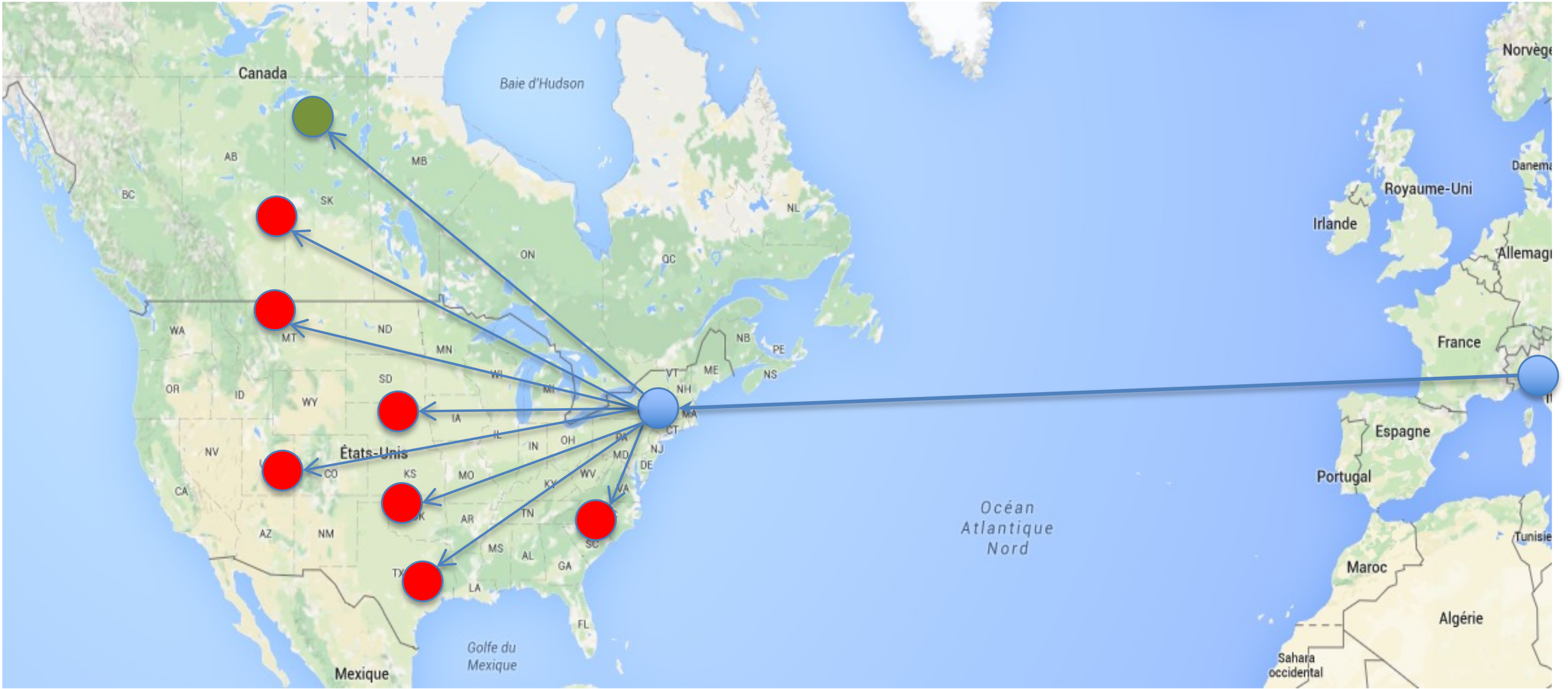
Deploying a Continental Data Mover Near the Target Sites — A Continental Data Mover is installed geographically closer to the intended recipients (e.g., in the US for North American users) to reduce latency and improve transfer speeds by minimising long-distance network hops. The chosen location must have reliable infrastructure to support high-speed data transfers.
-
Optimising Internet Connectivity to the Continental Data Mover — High-bandwidth, low-latency network connections are used to link the OpenECPDS Master Server to the Continental Data Mover, ensuring fast and stable transfers. Redundant network paths are established to minimise the risk of disruptions. Where possible, direct peering agreements with major Internet providers or dedicated network links (e.g., RMDCN for institutional users) are used to enhance performance.
-
Pre-Replicating Data Before Peak Times — Data is replicated onto the Continental Data Mover before the official schedule time to avoid congestion and delays. This ensures availability ahead of peak demand, reducing competition for bandwidth during dissemination. Replication is ideally scheduled during off-peak hours to take advantage of lower network usage.
-
Disseminating Data Directly from the Continental Mover — Users receive data from the Continental Data Mover instead of the OpenECPDS Data Movers, reducing the load on the primary dissemination system and improving delivery speeds. The Continental Data Mover is configured to support all required OpenECPDS dissemination protocols (e.g., FTP, SFTP, HTTPS, WebDAV, S3) to ensure seamless access.
Data transfer flows
The data files are proactively replicated from one of the OpenECPDS Data Movers to the Continental Data Mover ahead of the scheduled dissemination time. This pre-replication ensures that the data is readily available, minimising delays when dissemination begins.
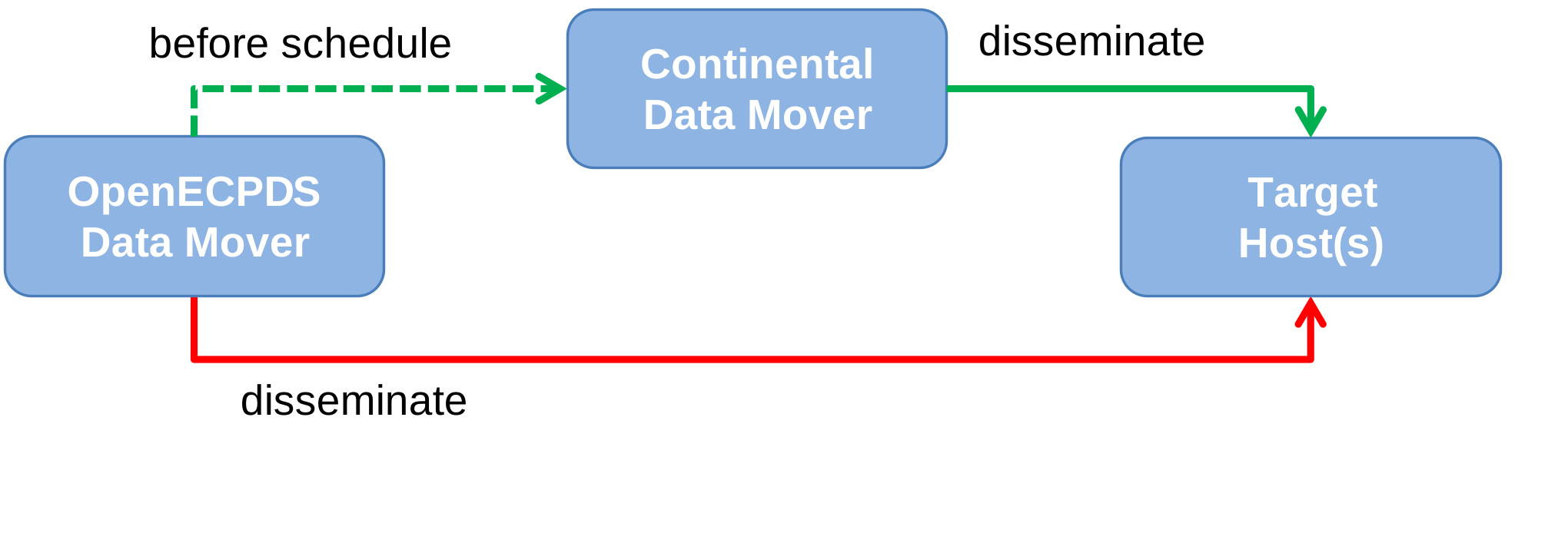
Once the scheduled time arrives, the OpenECPDS Master Server instructs the Continental Data Mover to initiate the transfer to the designated target host. This is the primary dissemination workflow.
However, if the Continental Data Mover encounters an issue, such as a disconnection or malfunction, a fallback mechanism is in place. In such cases, the dissemination is automatically handled by one of the OpenECPDS Data Movers, ensuring continuity of service.
Setting up a Continental Data Mover
In OpenECPDS terminology, a Continental Data Mover is essentially a standard OpenECPDS Data Mover with limited functionalities and an alternative communication module designed to receive instructions from the OpenECPDS Master Server.
To set up a Continental Data Mover within OpenECPDS, it is necessary to define a Proxy Host and associate it with a specific Destination. OpenECPDS will then use this Proxy Host to manage pre-replication tasks and facilitate communication with the Continental Data Mover.
The CPY (Copy/Replication) event records replication between an internal Data Mover and a Continental Data Mover with the proxy action — see CPY fields. The Replication, Source, Backup & Proxy Directory page describes the related host configuration.