Acquisition
The Acquisition System is designed to connect to data providers to first discover the available data, then select the relevant data, and finally retrieve it in a second phase. Each phase occurs asynchronously: first, the Discovery phase, followed by the Retrieval phase.
Acquisition is configured through acquisition hosts attached to a destination. The selection of files at the source is controlled by the Acquisition Directory field.
Discovery
The Acquisition Scheduler checks each acquisition host and triggers a discovery of remote files based on a timeline configured at the destination and host level.
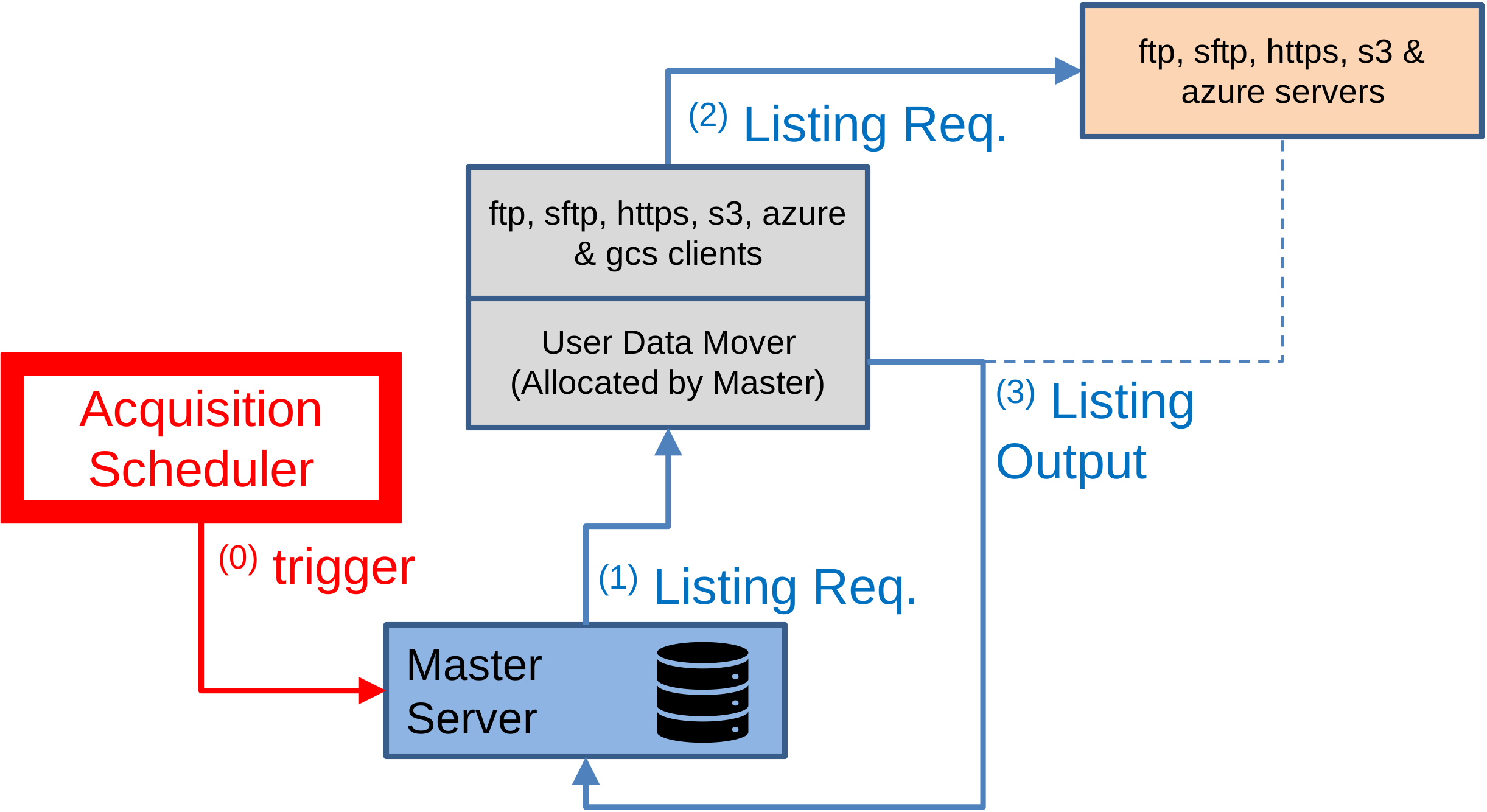
When a discovery is triggered, the following steps occur:
- The Master allocates a Data Mover and connects to it to initiate a connection to the remote host and request a file listing.
- The Data Mover selects the appropriate transfer module based on the protocol defined in the host configuration, and using the selected module, connects to the remote site and issues a listing request.
- The listing output is sent back to the Master Server, which registers the selected data transfers.
Retrieval
The Retrieval Scheduler processes all files registered in OpenECPDS during the Discovery phase and triggers the retrieval of their content from the Data Providers.
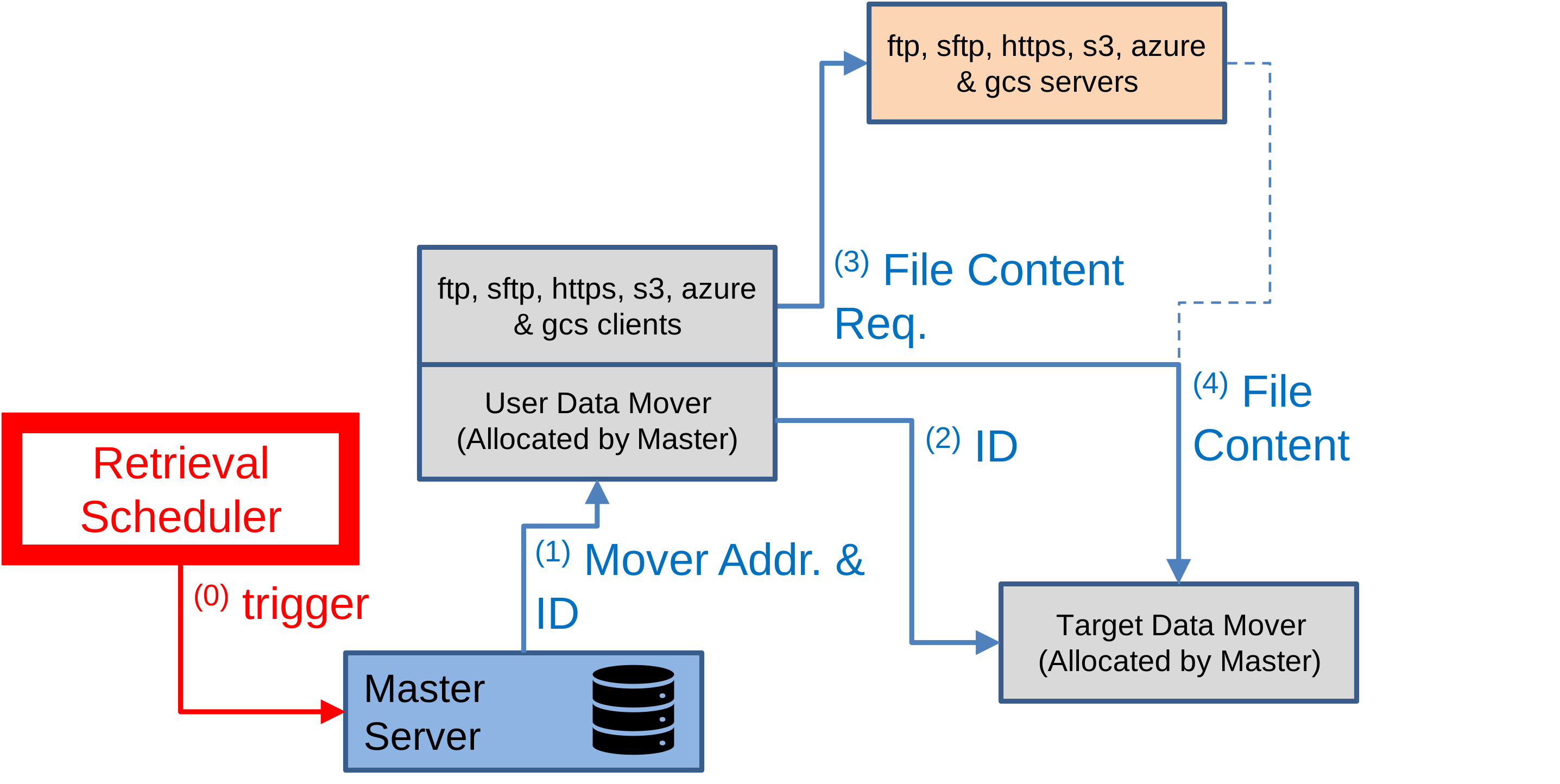
When a retrieval is triggered, the following steps occur:
- The Master Server allocates a User Data Mover to connect to the remote site and forwards the Data File ID and the address of the Target Data Mover, which was allocated for storing the data file.
- The User Data Mover connects to the Target Data Mover, forwards the Data File ID, and requests a stream for storing the file's content.
- The User Data Mover locates the transfer module configured for the remote site, initiates a connection, and requests the file content.
- The file content is streamed from the remote site to the Target Data Mover.
Automated acquisition via MQTT
OpenECPDS includes an embedded MQTT client within its HTTP transfer module, enabling automated acquisition triggered by real-time notifications from remote providers. See Automated Data Acquisition with MQTT Client.
Related
- Dissemination
- Acquisition Directory
- RET event fields — retrieval records
- HTTP/HTTPS Transfer Module